
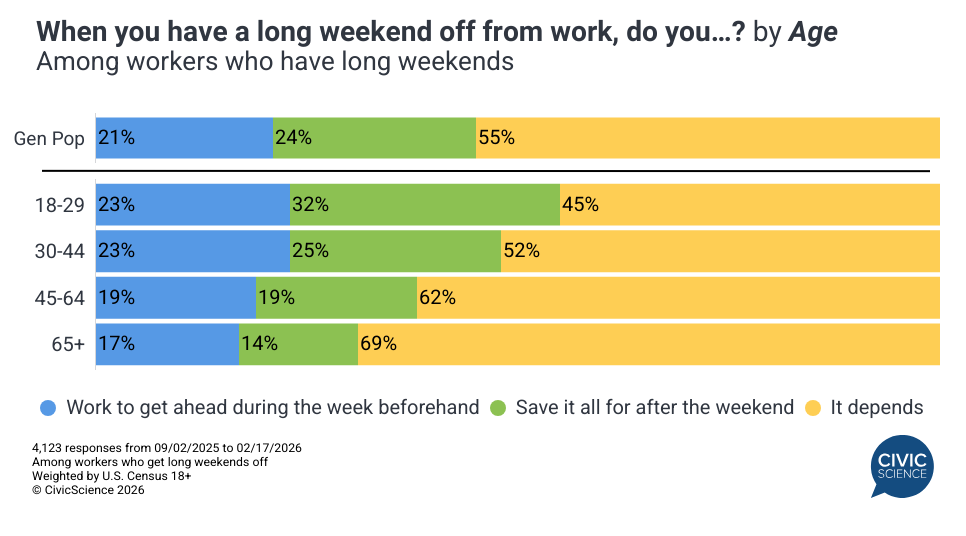
President’s Day means this past weekend was a three-day weekend for American employers who recognize federal holidays. Among workers who get a long weekend off like this, 21% tell CivicScience they typically start work for the following week ahead, while 24% say they usually save the work for after the weekend. Still, the majority (55%) say it depends on the situation.
A look at the data among workers by age reveals a clear generational divide. Americans over 45+ are much more likely to say that how they handle their workload ahead of a long weekend is situational. Meanwhile, Gen Z (18-29) is the most likely to save all of their work for when they return after a long week.
But demographics aren’t the only thing that sets these workers apart from each other CivicScience data reveal distinctive lifestyle habits, specifically among those who work to get ahead of a holiday weekend and those who save the work after the weekend:
- Brand loyalty: 44% of those who work to get ahead of a long weekend say they are ‘very’ loyal to the brands they buy, 13 points higher than those who save their work for after a weekend (among those loyal to brands).
- Moviegoing frequency: Those who do their work ahead of a long weekend are 15 points more likely than those who save their work to say they go to the movies at least once per month or more (34% to 19%, respectively).
- Coffee drinking habits: Both segments are nearly equally as likely to drink coffee every day, without fail, with those who save their work for after a long weekend slightly more likely (40% to 37%, respectively). That said, those who work to get ahead of a long weekend are nearly twice as likely to say they never drink coffee (21% to 12%).
- Nutri-Grain breakfast/snack bars: Nearly 7 in 10 Americans who do their work before the start of a long weekend (67%) say they enjoy Nutri-Grain breakfast/snack bars, nine points higher than those who save their work for after a long weekend (58%).
Whether tackling tasks early or holding off until Tuesday, how Americans approach long weekends reveals more than just work styles—it points to broader patterns in brand engagement, entertainment preferences, and daily routines. Understanding these distinctions offers valuable insight into the motivations and behaviors that drive consumer decisions beyond the office.
Where do you stand? Take this poll now and see how you compare with others who share your approach:
Love taking polls? Sign up to participate in the Poll of the Day here.
This article’s data comes solely from CivicScience’s database, which contains nearly 700,000 poll questions and 5 billion consumer insights.