For many, going to the dentist is a regular part of maintaining a healthy mouth. However, just because these visits are recommended, doesn’t mean that they’re universally enjoyed. In fact, just 14% of Americans tell CivicScience they enjoy going to the dentist, as compared to 38% who say they hate it and 48% who say it’s just “okay” (among those with an opinion).
Those who favor a routine teeth cleaning skew male, Millennial, and lower-income. However, these demographic insights are just the beginning of what makes fans of the dentist stand out.
Here’s what sets dentist fans apart from those who’d rather skip the visit:
Desire to Leave the House: Those who enjoy going to the dentist demonstrate a higher desire to leave the house than those who hate it (34% vs 15%).
Lawn Care: Among homeowners, those who enjoy going to the dentist are 14 percentage points more likely to hire a local amateur to care for their lawn than those who hate the dentist (24% vs 10%).
Music (dis)Interest: Those who enjoy going to the dentist are more than four times as likely to say they are not interested in music as those who hate the dentist (29% vs 6%).
Economic Outlook: While 43% of those who enjoy going to the dentist say they believe the economy will stay the same, just 23% of those who hate the dentist share this sentiment.
Bed Time: Those who enjoy going to the dentist are the most likely to go to bed between 8pm and 10pm, outpacing all others with the same bedtime by at least 14 percentage points.
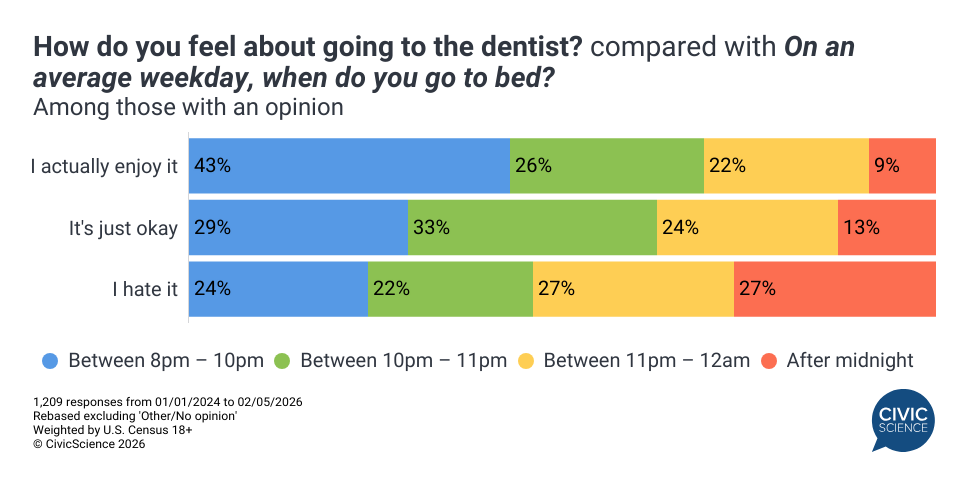
Although they may be in the minority, those who enjoy going to the dentist display unique consumer behaviors, demonstrating preferences for wellness on every front–from leaving the house to getting to bed on time and outsourcing unwanted tasks–like lawn care–to someone else. This suggests that although they may enjoy a largely unpopular dentist visit, these consumers are committed to their overall wellbeing.
Love taking polls? Sign up to participate in the Poll of the Day here.
This article’s data comes solely from CivicScience’s database, which contains nearly 700,000 poll questions and 5 billion consumer insights.