
With winter storm Fern having just left her mark across the country and many Americans experiencing arctic temperatures, now may not be the time one would think to fire up the grill. However, grilling in the winter during a snowfall is not uncommon. In fact, 53% of respondents report that they have gotten their grill going at least once during a snowfall, which is quite the commitment.
Here’s what sets winter grillers apart from those who prefer to save the grill for warmer, dryer months:
Plant-Based Meats:Those who have used an outdoor grill during a snowfall are more likely to have tried plant-based meat, but are 11 percentage points more likely to have tried and disliked it than those who have not participated in outdoor, snowy grilling (29% vs 18%).
Grocery Shopping: While 32% of outdoor, winter grilling fans say their spouse or partner does the grocery shopping, just 24% of those who do not grill during a snowfall say the same.
Local Ingredients: Those who have used an outdoor grill during a winter snow fall are 20 percentage points more likely to buy locally grown food often than those who skip outdoor winter grilling (71% vs 51%).
Political Engagement: While 86% of outdoor grill fans say they follow politics ‘very’ closely, just 66% of those who don’t grill outdoors in the winter say the same.
Phone Calls: Outdoor winter grill fans are nine percentage points more likely to use phone calls to communicate with friends and family than those who don’t use the outdoor grill in the winter.
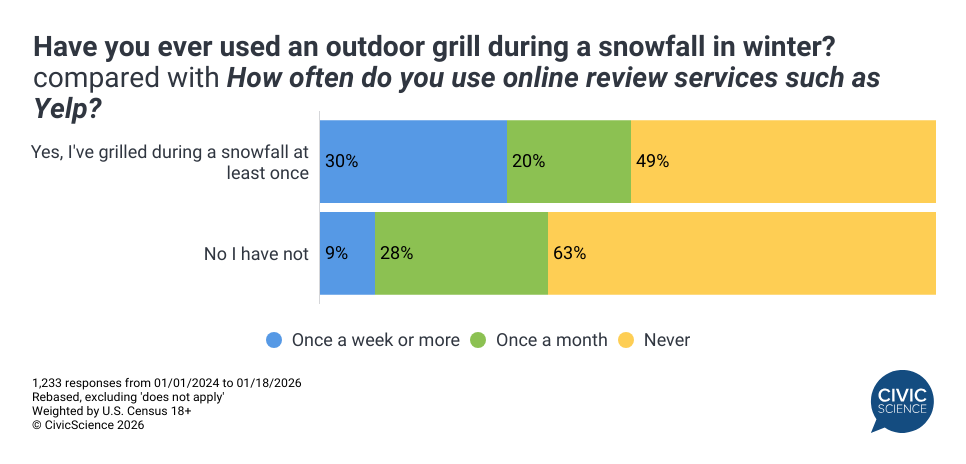
Online Reviews: Those who grill outdoors during a snowfall are three times as likely as those who skip this winter activity to say they use online review services such as Yelp once a week or more.
While the decision to grill outside in the snow may not appeal to everyone, the data reveal that this is just one of many behaviors that set this group of consumers apart– in how they prepare their food and in how they move through the world at large.
Love taking polls? Sign up to participate in the Poll of the Day here.
This article’s data comes solely from CivicScience’s database, which contains nearly 700,000 poll questions and 5 billion consumer insights.