

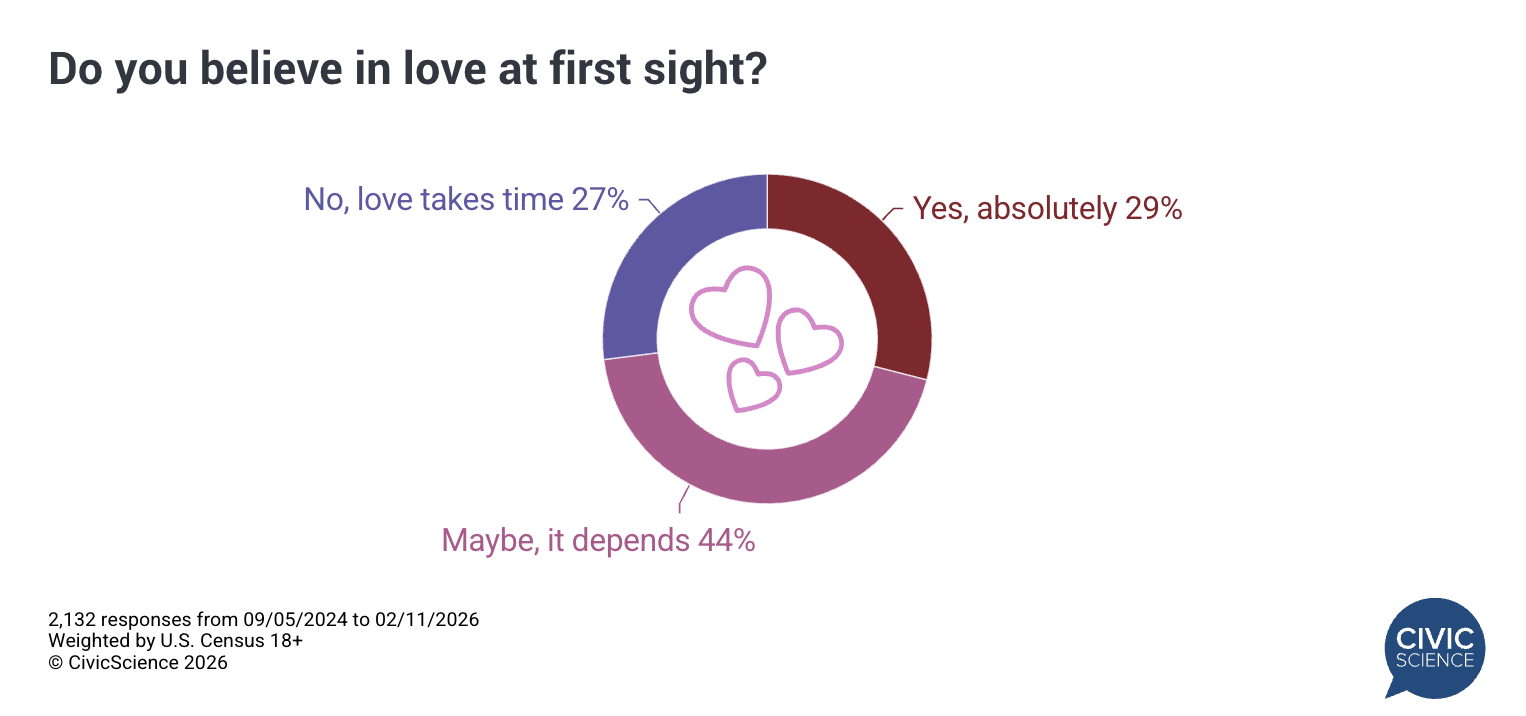
With Valentine’s Day right around the corner and love in the air, Americans remain divided on one of romance’s most debated ideas: love at first sight. According to a recent CivicScience poll, 29% of U.S. adults say they believe in love at first sight, while 44% say ‘maybe, it depends,’ and 27% say ‘no, love takes time.’
Belief in love at first sight varies across demographic groups. Gen X is the most likely to say they absolutely believe in it, and men and women are equally likely to hold that view. Adults in middle- and high-income households, suburban residents, and those living in the Midwest and Northeast are also more likely to say they believe in love at first sight.
But demographics aren’t the only thing setting romantics apart. CivicScience data reveal meaningful differences in how believers approach dating, trust, relationships, and more:
-
Looks & Trust: Those who absolutely believe in love at first sight are more than 10 points more likely than those who don’t to say that physical appearance significantly affects how much they trust someone.
-
Dating Frequency: Over one-third of believers say they go on a date with their partner at least once a week, compared to about 20% of those who don’t believe in love at first sight. Nearly 40% of believers also describe themselves as very good at planning romantic dates.
-
Double Dates: Believers are nearly twice as likely to say they’re against going on double dates compared to non-believers.
-
Dating App Success: A majority (55%) of those who absolutely believe in love at first sight say they’ve had success on dating apps, compared to just 16% of non-believers (excluding ‘does not apply’).
-
Saying “I Love You”: Nearly 6 in 10 believers say they end every phone call with their spouse or partner by saying “I love you,” compared to about 3 in 10 non-believers.
-
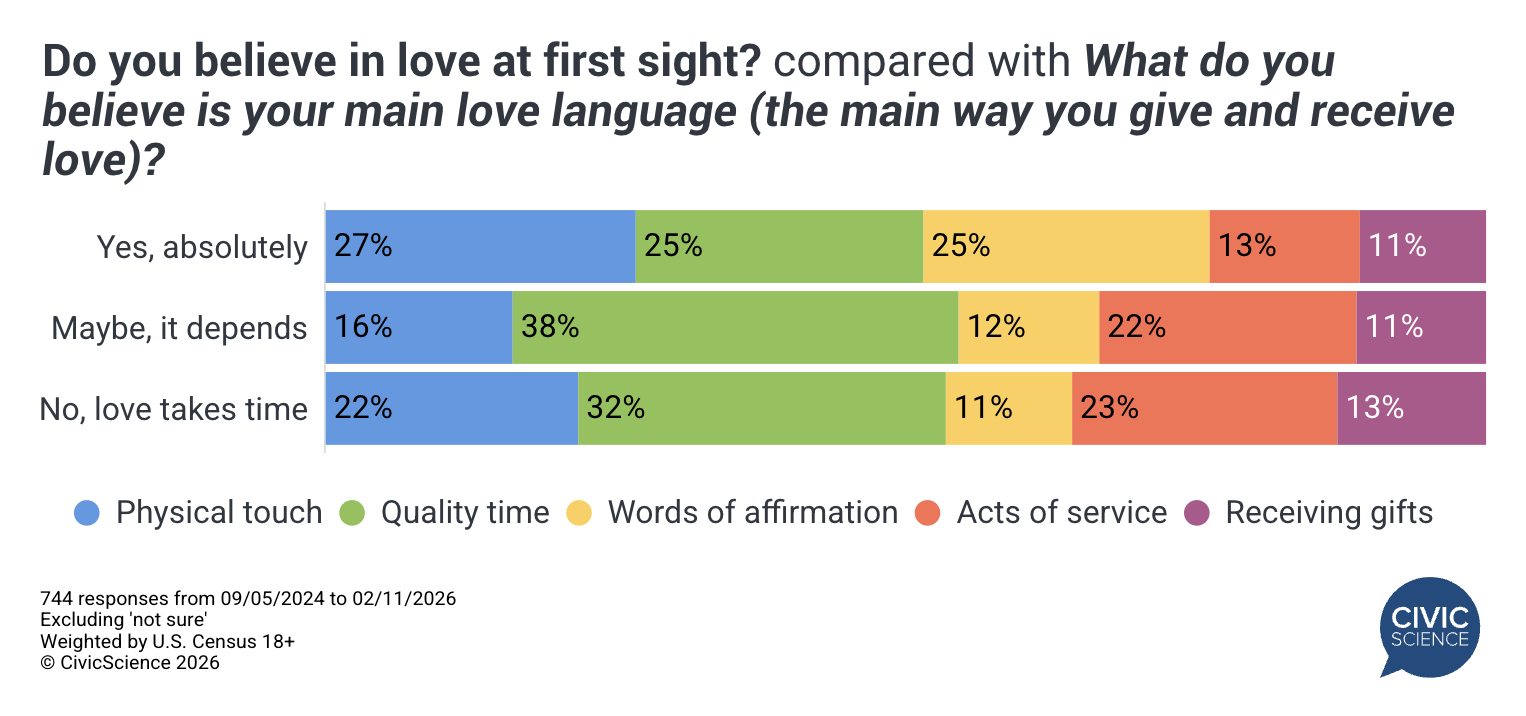
Love Languages: Those who believe in love at first sight are most likely to say their primary love language is physical touch, while skeptics are more likely to choose quality time.
Whether driven by chemistry, intuition, or optimism, belief in love at first sight appears tied to a more expressive and frequent approach to romance. As Valentine’s Day approaches, the data show that for nearly one-third of Americans, love doesn’t always need time; it just needs the right moment.
Love taking polls? Sign up to participate in the Poll of the Day here.
This article’s data comes solely from CivicScience’s database, which contains nearly 700,000 poll questions and 5 billion consumer insights.