
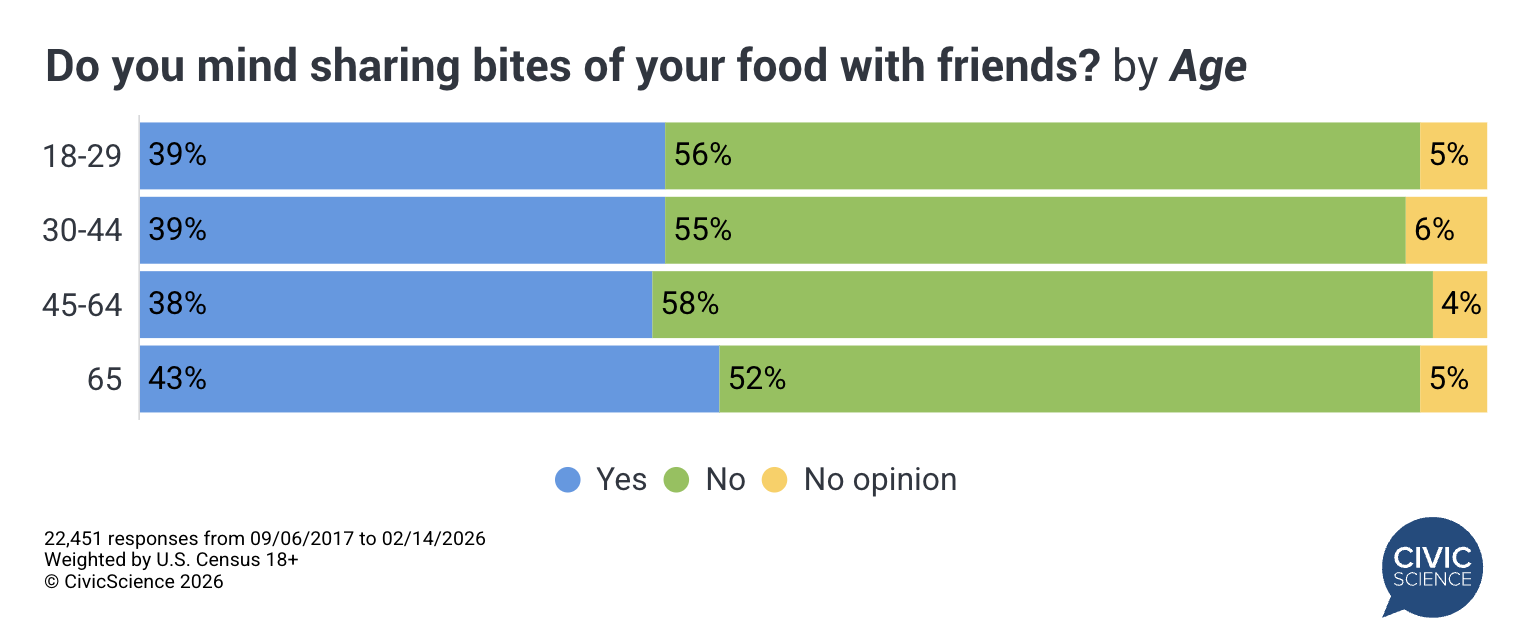
From splitting appetizers to sneaking a fry off someone else’s plate, sharing food can either feel friendly or frustrating. So where do Americans stand? According to a CivicScience poll, 56% say they don’t mind sharing bites of food with friends, while nearly 40% say they do mind. The remaining 5% say they’re indifferent, suggesting that while most are open to sharing, a sizable minority would prefer to keep their plate to themselves.
Willingness to share varies by demographic group. Baby Boomers aged 65+ are the most likely to say they mind sharing food, along with men, adults in high-income households, and those living in cities. Regionally, residents of the Northeast and Midwest are more likely than others to say they prefer not to share.
But demographics aren’t the only thing separating sharers from non-sharers. CivicScience data reveal meaningful lifestyle differences between those who mind sharing and those who don’t:
-
Dining Habits: Those who don’t like sharing food are more likely to say they rarely or never dine out or order takeout (34% vs. 29% of those who don’t mind sharing).
-
Hangry Tendencies: They’re also slightly less likely to say they get hangry when they haven’t eaten (27% vs. 32% of those who don’t mind sharing).
-
Meal Timing: While dinner out remains the most common restaurant occasion for both groups, those who mind sharing are four points more likely to say they prefer going out for lunch most often.
-
Chopstick Use: Nearly half of those who mind sharing say they don’t know how to use chopsticks or never use them, compared to 34% of those who share food.
Whether it’s about boundaries or simply wanting your own portion, attitudes toward sharing food connect to broader dining habits and preferences. For some, sharing is part of the social experience. For others, it’s simple: if you wanted it, you should’ve ordered it.
Love taking polls? Sign up to participate in the Poll of the Day here.
This article’s data comes solely from CivicScience’s database, which contains nearly 700,000 poll questions and 5 billion consumer insights.