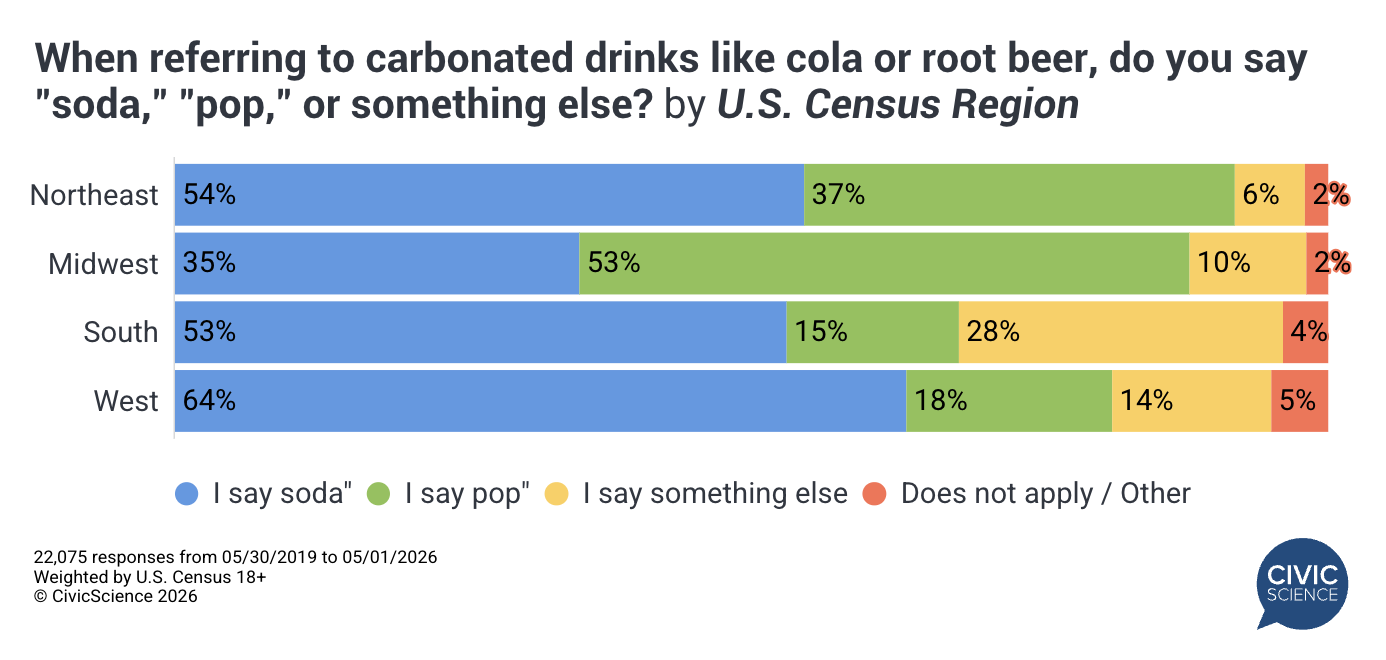
From “soda” to “pop,” Americans have long debated what to call carbonated soft drinks—and where you live still plays a major role in the answer. According to a CivicScience poll of more than 20K respondents, 51% of U.S. adults say they call it “soda,” while 30% prefer “pop.” The remaining 18% say they use another term.
The differences are relatively similar across generations, though Gen Z has a slight lead in saying “pop,” while Millennials are somewhat more likely to say “soda.” Men also lean slightly more toward “pop,” as do middle-income households. Meanwhile, saying “soda” is especially prominent among those earning over $100K annually, with 67% using the term. Geography also matters: city and suburban residents are more likely to say “soda,” while rural residents show a slight preference for “pop.”
Unsurprisingly, the biggest divide is regional. A majority (53%) of Midwesterners say “pop,” while those living in the West are the most likely to say “soda.”
But demographics aren’t the only thing separating the soda crowd from the pop crowd. CivicScience data reveal several interesting lifestyle and language differences between the two groups:
- Seafood consumption: Those who say “soda” are eight points more likely than those who say “pop” to report that seafood is a regular part of their diet.
- Fast-food habits: Those who say “pop” are five points more likely than soda drinkers to say they usually go inside a fast-food restaurant instead of using the drive-thru (32% vs. 27%).
- Workplace language: Soda fans are more than twice as likely to refer to the people they work with as “colleagues” rather than “coworkers.”
- Saying “I love you”: Nearly half (47%) of those who say “pop” report that they always say “I love you” before hanging up with a spouse or partner, compared to 39% of soda fans.
- Supper vs. dinner: Pop fans are 12 points more likely to call the evening meal “supper,” while soda fans show a similarly strong preference for calling it “dinner.”