

Once largely confined to science fiction and philosophy debates, the idea that we may be living in a simulation occasionally resurfaces in tech and online conversations. But how many Americans actually think it’s plausible?
According to a recent CivicScience poll, 7% of U.S. adults say it’s ‘very likely’ we’re living in a simulation, and another 15% say it’s ‘somewhat likely.’ Meanwhile, a majority (55%) say it’s not at all likely, and 23% say they don’t know what the concept means.
Belief skews younger. Gen Z adults aged 18–29 are the most likely to say it’s at least somewhat likely we’re living in a simulation. Men are more inclined than women to see it as plausible, as are residents of the Western U.S. and those living in urban and suburban (non-rural) areas.
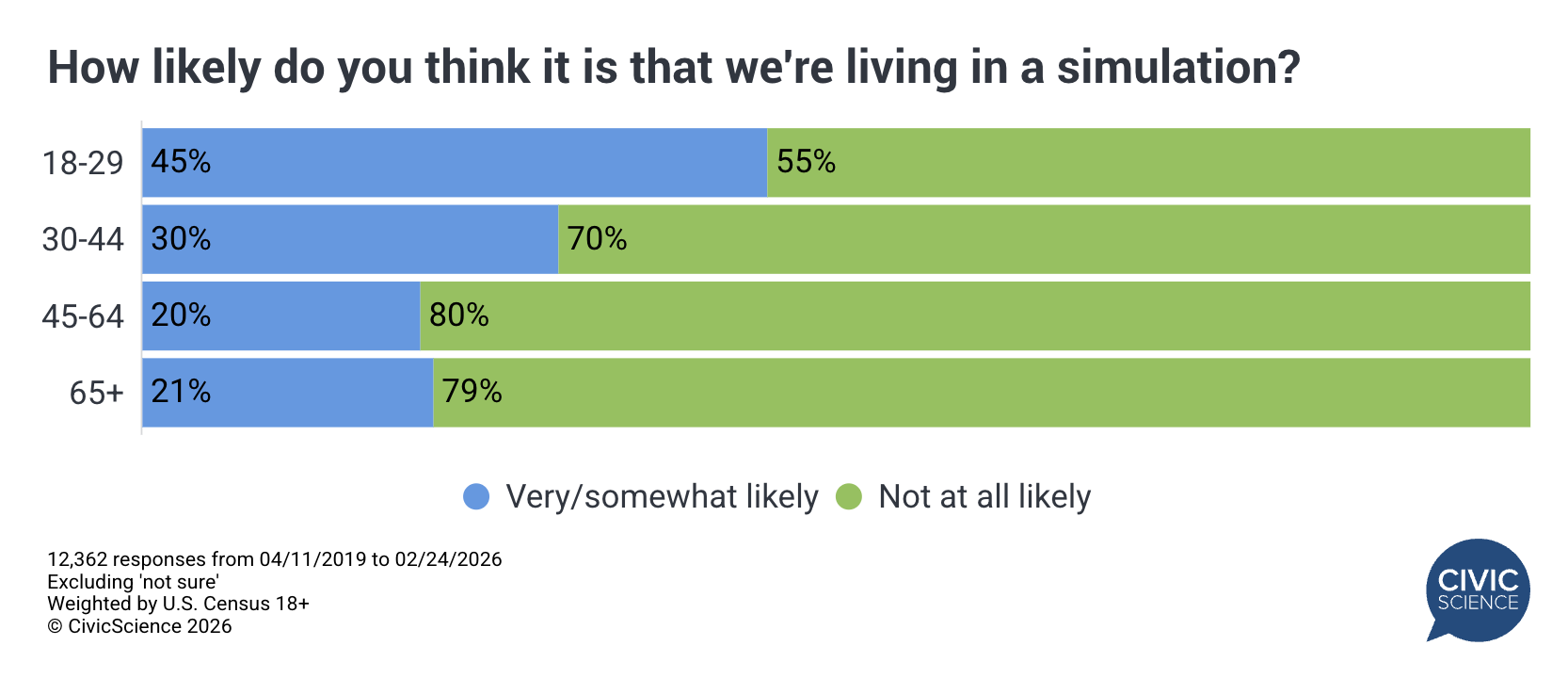
But demographics aren’t the only thing separating simulation believers from skeptics. Excluding those who say they’re unsure what the concept means, CivicScience data reveal distinct lifestyle and attitudinal differences:
- Adventurous Eaters: They’re nine points more likely to describe themselves as more adventurous than others when trying new foods (44% vs. 35%).
-
Climate Change Concerns: A majority (58%) of simulation believers say they’re concerned about climate change, outpacing the 44% of skeptics who say the same.
-
Movies as a Passion: One in five (20%) of those who think we may be living in a simulation say movies are important to them or a true passion, compared to 15% of those who don’t believe it’s possible.
-
Consumer Privacy: Concern extends beyond philosophy, 69% say they’re very concerned about consumer privacy, compared to 49% of those who don’t believe we live in a simulation.
-
Value Menus: They’re also five points more likely to say they’re at least somewhat interested in value menu items from fast food restaurants (42% vs. 37%).
While the belief that we’re living in a simulation remains a minority view, those open to the idea stand out in measurable ways. They report stronger interest in movies, higher concern about climate change and consumer privacy, and a greater likelihood of describing themselves as adventurous when trying new foods. The differences suggest that attitudes toward simulation theory connect to broader lifestyle and worldview patterns.
Love taking polls? Sign up to participate in the Poll of the Day here.
This article’s data comes solely from CivicScience’s database, which contains nearly 700,000 poll questions and 5 billion consumer insights.