As conversations online swirl around nostalgia and cultural resets, a new phrase has entered the mix: “2026 is the new 2016.” The idea taps into a broader sentiment that life once felt simpler—and that the coming year might recapture some of that energy. But how many Americans actually hope that’s true?
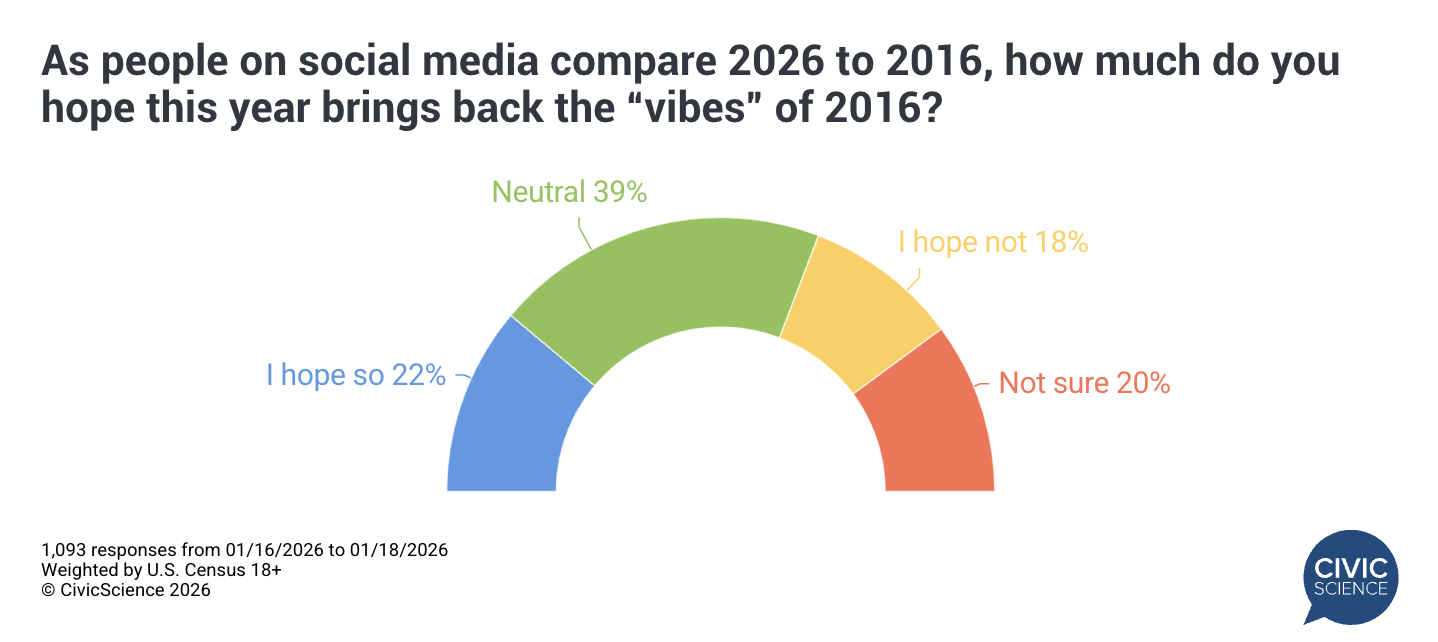
According to a CivicScience poll, 22% of U.S. adults say they hope 2026 brings back the “vibes” of 2016. A larger share (39%) feel neutral, 18% say they hope not, and 20% remain unsure, suggesting the trend resonates with some but hasn’t fully broken into the mainstream.
Those who hope 2026 mirrors 2016 skew younger, which isn’t surprising given the trend’s social-media roots. Gen Z adults aged 18–29 lead, with 31% saying they hope the vibes return. Men are more likely than women to feel this way, as are adults in middle-income households. Geography also plays a role: city dwellers, along with those living in the Northeast and Midwest, are more likely to say they’re hoping for a return to a 2016-like atmosphere.
But demographics aren’t the only thing that set these respondents apart. CivicScience data reveal several notable lifestyle differences among those who hope 2026 brings back the vibes of 2016:
-
Getting Outside: Nearly half of those who hope for a 2016-style return say they frequently visit national or state parks, far outpacing those who say they hope not (11%).
-
Staying In vs. Going Out: This group is more likely to report having strong feelings—either wanting to leave the house more or stay in more—while others are more likely to feel neutral about how often they go out.
-
Home Fitness: A majority (58%) say they have home gym equipment, compared to 40% of those who say they don’t hope 2026 feels like 2016.
-
Mindfulness: They’re also twice as likely to use mindfulness or meditation apps (43% vs. 21%).
-
Sleep Habits: Bedtime patterns differ as well. Those hoping for 2016 vibes are much more likely to go to bed earlier—between 8 p.m. and 11 p.m.—while those who hope not tend to stay up past 11 p.m.
Whether it’s about nostalgia, routine, or a desire for balance, the idea of “2026 as the new 2016” reflects more than just a viral phrase. For the Americans who hope it becomes reality, that sentiment connects to how they spend their time, care for their health, and structure their days—revealing that the trend is as much about lifestyle as it is about memory.
Love taking polls? Sign up to participate in the Poll of the Day here.
This article’s data comes solely from CivicScience’s database, which contains nearly 700,000 poll questions and 5 billion consumer insights.