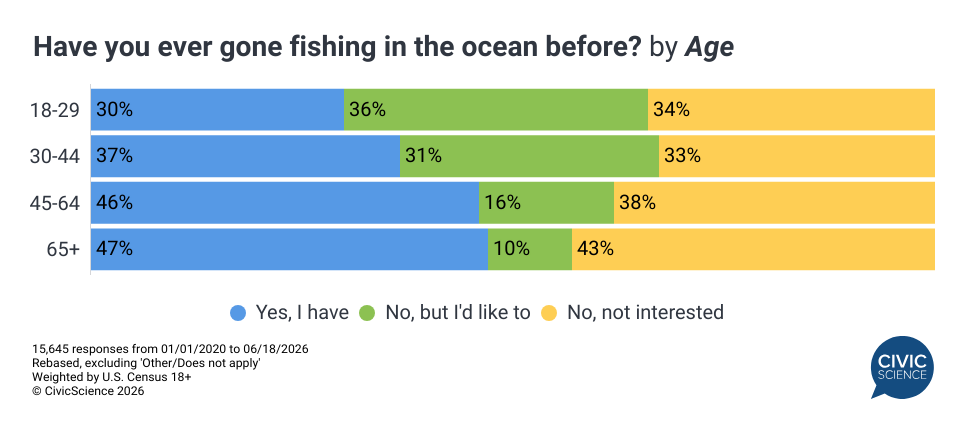
Ocean fishers skew male and slightly older, with those who are 45 and up outpacing adults aged 18-44 with ocean fishing experience by a minimum of nine percentage points. Income also matters, as those who make $100K or more annually are 17 percentage points more likely to have fished in the ocean than those who make $50K or less annually.
Of course, this demographic data is just the beginning of what sets ocean fishers apart from the rest. Here’s what the data show:
Spending Behavior: Those who have gone fishing in the ocean are 11 percentage points more likely to say they are careful about spending than those who have never been (74% vs 63%).
Food Sourcing Priorities: While 68% of those who have fished in the ocean say they buy locally grown food, just 52% of those who have never been and are not interested in ocean fishing say the same.
Brand Boycotting: Those who have gone ocean fishing are 15 percentage points more likely to boycott brands supporting causes they’re against than those who have never gone and aren’t interested (61% vs 46%).
Streaming Time: While 28% of those who enjoy ocean fishing say they spend an hour or less watching streaming videos every day, just 20% of those who have not been and do not plan to go ocean fishing say the same.
Tech Enthusiasts: Those who enjoy ocean fishing are eight percentage points more likely to enjoy telling others about new brands or technology than those who have not been ocean fishing and do not plan to do so (41% vs 33%).
Where do you stand? Take this poll now and see how your preference compares with other Americans:
Clearly, those who enjoy spending the day fishing in the ocean aren’t just keen fishers with a taste for adventure, but unique consumers with specific behaviors that impact how they spend and move through the world, both in the boat, and beyond.
Love taking polls? Sign up to receive topical polls straight to your inbox every day in The CivicScience Poll of the Day here.
This article’s data comes solely from CivicScience’s database, which contains nearly 700,000 poll questions and 5 billion consumer insights.